
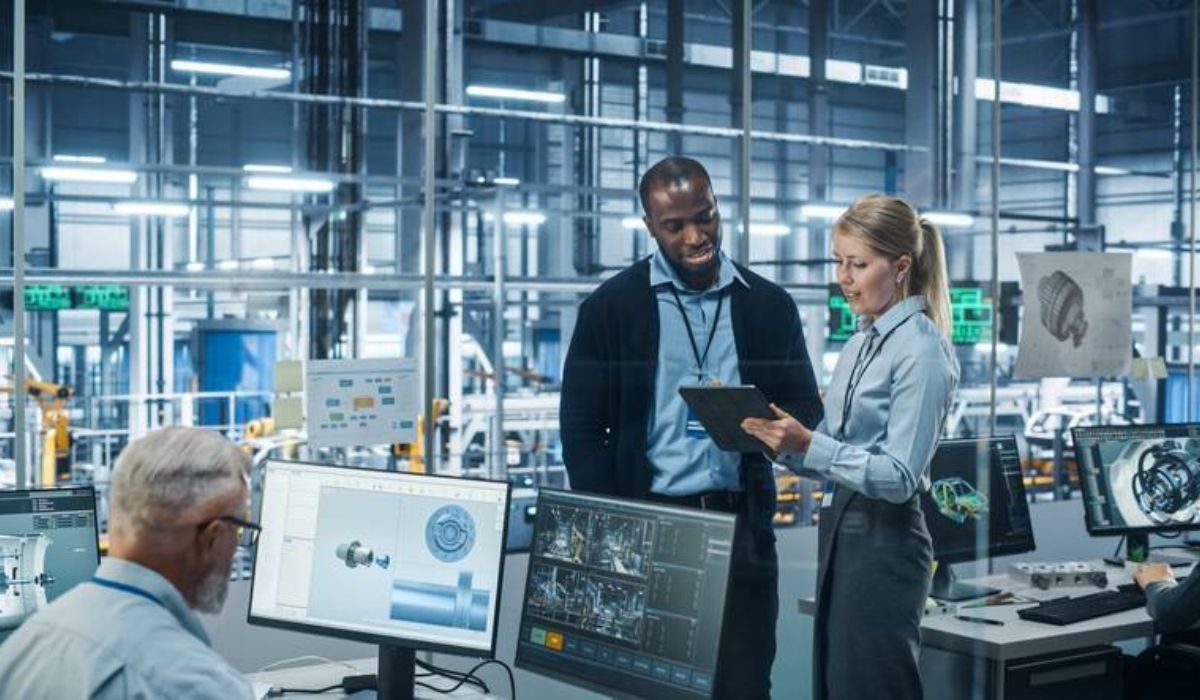
The data migration in Manufacturing has become an important issue of the functioning of the modern factory, its development, and its competitive standing. Manufacturers are not working with a simple set of data anymore; they are required to work with complex streams of production data, inputs into the supply chain, and machine-level information that has to be up-to-date and available at all times.
Older systems have a tendency to languish as businesses grow and embrace new technologies. This disconnect brings about inefficiencies, delays and ineffective decision-making. This is where properly analyzed migration plan becomes inevitable. Data Migration in Manufacturing enables companies to transfer their data to more sophisticated settings where the data can be utilized.
Proper execution not only enhances the performance of the system, it also enhances the business intelligence and long term planning.
What is Data Migration in Manufacturing and How It Works?
The concept of Data Migration in Manufacturing is a formalized process of transferring important business data between systems without compromising accuracy, security and usability. It entails production information, inventory information, maintenance records and quality control information that are vital in daily running of the operations.
This is done through various phases including data extraction, data validation, transformation and loading into a new system. The process has to be conducted step-by-step with great care to avoid losing or corrupting any data in the process of transition.
The complexity of this process is increased in manufacturing environments when it comes to the number of sources of data. The post-migration work of systems such as ERP, MES, or IoT platforms should all be seamlessly interconnected.
Driving forces in the process:
- Detecting data sources that are critical.
- Purification and validation of data prior to transfer.
- Maps between old and new data format.
- Accuracy of testing data post-migration.
- Providing system availability throughout transition.
Data Migration in Manufacturing assures companies that their operations will not be halted by undertaking the process of updating their technological base.
Why Data Migration in Manufacturing is Essential for Modern Businesses?
Migration of data to manufacturing has ceased to be a one-time affair. It is a continuous need where companies are changing and adapting new changes in technology.
The current production requires real-time information, greater processing speed and integration within different departments. Without migration, data will not be unlocked in obsoleces systems, which restrict its usefulness.
By investing in the migration process, organizations become more visible in their operations, and can respond swiftly to changes in the market.
Significant motivators behind its importance:
- Increased volumes of data in production and supply chains.
- Growing need in real-time analytics.
- Require connection between several systems.
- Increasing expenses of supporting old infrastructure.
These aspects render Data Migration in manifolding, a requisite endeavor towards realizing the performance efficiency and business dynamism.
Real-World Applications of Data Migration in Manufacturing
Data Migration in Manufacturing is used in a range of situations when companies strive to enhance scalability and performance.
It contributes significantly when a system is upgraded, undergoing a digital transformation effort or adopting technology.
This is used in common to:
- Switching of old systems to cloud applications.
- Combining supply chain and manufacturing information.
- Fostering automation and AI-based systems.
- Combining the information of several business units.
To review the table below, it should be noted that every application leads to the increased efficiency and less complex operations.
| Application Area | Purpose | Business Outcome |
| Cloud Migration | Move data to scalable systems | Improved flexibility |
| System Upgrade | Replace outdated platforms | Better performance |
| Data Integration | Connect multiple systems | Seamless workflows |
| Analytics Enablement | Prepare data for AI tools | Faster insights |
Such applications demonstrate that Data Migration in Manufacturing helps in achieving operational and strategic objectives.
Key Benefits of Data Migration in Manufacturing
Data Migration in Manufacturing offers quantifiable benefits that directly affect the business performance. Such advantages are not limited to technical advances and affect the overall decision-making and development.
Those companies that have invested in adequate migration strategies usually experience productivity and cost efficacies.
Important benefits include:
- Improved information accessibility in departments.
- Increased system performance and speed.
- Economies of operation.
- Improved adherence to industry laws.
- Greater capability to innovate and scale.
It is important to mention before the table below that such benefits are more conspicuous once migration is aligned with the business objectives.
| Benefit | Description | Impact |
| Efficiency | Faster data processing | Higher productivity |
| Cost Savings | Reduced maintenance | Lower expenses |
| Decision Making | Real-time insights | Better planning |
| Scalability | Supports growth | Long-term expansion |
Manufacturing Data Migration assists companies to work more successfully in the competitive environment.
Major Challenges in Data Migration in Manufacturing
Although the business approach has some advantages, Data Migration in Manufacturing has a number of challenges to consider which must be planned and implemented.
The complexity of manufacturing systems and high amounts of data present make these issues.
Common challenges include:
- Sliced together departmental data.
- Complex data structures and formats.
- Absence of documentation in legacy systems.
- Migration risk of downtime.
- Security and compliance issues.
These bottlenecks can cause disruption of operations and the loss of data, before relocating to the table, it is essential to realize that ignoring these pitfalls may jeopardize the operations.
| Challenge | Risk | Recommended Approach |
| Data Silos | Incomplete data view | Centralize data systems |
| Legacy Systems | Mapping issues | Conduct detailed audits |
| Downtime | Production delays | Plan phased migration |
| Security Risks | Data breaches | Implement strong controls |
These challenges are addressed in order to smooth Data Migration in Manufacturing process.
Importance of a Unified Control System in Migration

A centralized control system is crucial in Data Migration in Manufacturing because it provides a central point of controlling and governing data.
It will give us visibility of all systems and make data homogeneous and conforming to the process of migration.
Such a system can be seen linking different platforms and enabling businesses to have control over their data ecosystem.
Major roles of an integrated system:
- Monitoring and control of data in a centralized manner.
- Uniform data control amongst systems.
- On-the-fly monitoring of data flow.
- Better compliance and audit-readiness.
Single platform is easy to migrate complex issues and it enhances efficiency.
Features That Enable Effective Data Migration
In Manufacturing Data Migration requires a number of sophisticated features that will be accurate and reliable throughout data migration.
These properties assist in controlling the large amounts of data and maintaining uniformity between systems.
Key features include:
- Data management metadata to organize data.
- Data flow tracking to monitor data.
- Having policies governed through automation.
- Live tracking to detect problems.
Prior to examining the table, it is necessary to mention that these features assist with less manual work and enable a higher quality of data.
| Feature | Function | Advantage |
| Metadata | Data classification | Better organization |
| Lineage | Data tracking | Transparency |
| Governance | Policy enforcement | Compliance |
| Monitoring | Issue detection | Quick resolution |
The features bolster the advantages of Data Migration in Manufacturing.
Best Practices for Successful Data Migration in Manufacturing
Data Migration in Manufacturing requires a systematic way of realizing this process. Without the appropriate planning, the process may result in mistakes and inefficiencies.
Companies need to adhere to a definite action plan and plan, which involves training and implementation and evaluation of the plan.
Recommended best practices:
- Have explicit pursuits of migration.
- Clean and check data prior to transfer.
- Adopt gradual transfer, rather than complete.
- Conduct comprehensive tests on the system before implementation.
- Arts: Teach new systems and work processes to teams.
The practices will minimize the risks and enhance the effectiveness of migration projects.
Future Trends in Data Migration in Manufacturing
Data Migration in Manufacturing will keep on evolving since technology is continuously improving. Manufacturers are increasingly gravitating towards increasingly connected and intelligent systems.
Trends in the future will be based on cloud computing, analytics and automation.
There will be more of businesses depending on combined platforms that will enable the flow of data throughout operations with ease.
Emerging trends include:
- More of AI being applied to analyse data.
- Expansion of cloud-based manufacturing.
- Increased attention to information security and compliance.
- Implementation of real-time monitoring devices.
Those companies that embrace these trends will be in a better position to succeed in the long run.
Conclusion
Process Data Migration in Manufacturing is a strategic action that promotes business growth, efficiency, and innovation. It helps companies to leave the old and use modern technologies that would enhance performance.
Businesses can manage to do this with the right tools, proper planning and a structured approach, that can overcome challenges and provide a seamless migration. With the ever changing manufacturing, Data Migration in Manufacturing will stay as a major element of digital transformation and operational excellence.
Also Read About :- GST for Freelancers: Registration, Rates & Returns Guide





Leave a Reply